
Countdown to Submission Deadline
- 00 DAY
- 00 HRS
- 00 MIN
- 00 SEC
The information about the Keynote Speakers of ICBLS2026 is as follows, which will be updated regularly.
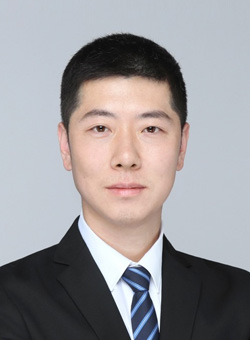
Dr. Zhiwei Qin, Professor
Centre for Biological Science and Technology, Beijing Normal University, Zhuhai, China
Biography: Dr. Zhiwei Qin is a Professor in the Centre for Biological Science and Technology at Beijing Normal University, China. He received his Ph.D. from the University of Aberdeen in 2013 under the supervision of Hai Deng. He subsequently joined the prestigious John Innes Centre as a postdoctoral researcher, where he worked with Barrie Wilkinson until 2019. Following a year in industry at the Demuris Ltd., a biotechnology spin-out associated with the Newcastle University, he established his independent research group at Beijing Normal University in 2020, where he is currently a Professor. His research focuses on microbial natural products, including their discovery, structural elucidation, biosynthesis, and biological functions. In recent years, his interests have expanded to artificial intelligence (AI) for natural product research, particularly the application of protein language models derived from large language model technologies. His recent work includes the AI-guided engineering of antimicrobial peptides, explainable prediction of substrate specificity of nonribosomal peptide synthetase, and protein language model-based analysis of the co-evolution of aromatic polyketide synthases (KSa and KSb). His long-term goal is to integrate AI with natural product science to accelerate the discovery, understanding, and engineering of bioactive microbial metabolites.
Topic: Learning Natural Products from Nature’s Way
Abstract: Microbial nonribosomal peptides (NRPs) exhibit remarkable structural diversity and represent an important source of lead compounds for clinical drug development. Their biosynthesis is catalyzed by nonribosomal peptide synthetases (NRPSs), in which adenylation (A) domains determine the core peptide structure by selectively recognizing and activating amino acid substrates. Accurate prediction of A-domain substrate specificity is therefore essential for understanding both the structural diversity and biosynthetic logic of NRPs. In this talk, we present DeepAden, a two-stage deep learning framework for predicting NRPS substrate specificity. In the first stage, a graph attention network (GAT)-based model identifies 27-residue substrate-binding pockets located within 6 Å of the bound substrate and generates informative pocket representations. In the second stage, these pocket representations are encoded together with substrate information using pretrained protein language models and aligned through contrastive learning. To address the challenge of class imbalance, particularly for nonproteinogenic substrates, we further developed a SHapley Additive exPlanations (SHAP)-guided data augmentation strategy. DeepAden achieves competitive performance compared with existing state-of-the-art methods on benchmark datasets and has been successfully applied to annotate two Streptomyces NRPS biosynthetic gene clusters by providing reliable A-domain substrate specificity predictions. By combining explainable artificial intelligence with protein language models, DeepAden provides a practical framework for substrate prediction and may accelerate the discovery and characterization of new nonribosomal peptide natural products.
© Copyright 2015-2026 14th International Conference on Biology and Life Sciences - All rights reserved.

 X (formerly Twitter)
 LinkedIn